
WHAT YOU SHOULD KNOW
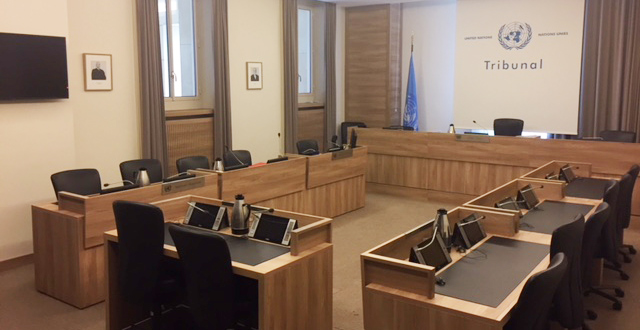
The 蘑菇视频 Dispute Tribunal (蘑菇视频DT) is an independent tribunal, with professional judges deliberating on and deciding cases, lawyers arguing cases, a professionalized Registry and courtrooms where case management discussions and hearings are held.WHAT IS EXPECTED OF YOU
You are asked to try informal means of resolution before applying to the 蘑菇视频DT for two reasons:
- To save the 蘑菇视频DT unnecessary use of its time so it can focus on cases that could absolutely not be resolved through informal means before proceeding to the 蘑菇视频DT;
- So you can avoid possibly unnecessary, energy- and time-consuming court proceedings.
WHERE CASES ARE ASSIGNED
The 蘑菇视频DT assigns the case to the appropriate registry in New York, Geneva or Nairobi, depending on where the staff member was working when the decision being disputed was made, although there may be other factors in determining where a case is considered and where proceedings eventually take place. If there is a 蘑菇视频DT hearing, it will generally take place in a courtroom in New York, Geneva or Nairobi.
NEGOTIATION AND MEDIATION IS ALWAYS POSSIBLE
At any point in the process, even if the dispute is pending before the 蘑菇视频DT, and even if a hearing is already taking place, the parties may refer the dispute back* to negotiation and mediation, through the 蘑菇视频 Ombudsman and Mediation Services or other forms of informal resolution.
THE JUDGE’S DECISION
To determine the case, sometimes already after the conclusion of the hearing or submission of written “closing arguments”, the judge issues a decision on the case, usually in the form of a judgment (see The Judge’s Decision). Both parties are then notified of the judge’s decision and the full decision is posted in the “Judgments and Orders” section of the public website of the 蘑菇视频’s Internal Justice System.
WHAT YOU SHOULD READ

Before you file your application to the 蘑菇视频DT so you can have your case considered, there are several documents you are advised to read so you can understand the 蘑菇视频DT, the way it functions, the rules it operates by, and the things you need to do in order to prepare yourself for formal 蘑菇视频DT case proceedings or a 蘑菇视频DT court hearing, if one or both eventually take place. This is particularly true if you are representing yourself, but it is also true if you arrange for legal assistance and representation from the Office of Staff Legal Assistance or other counsel.
Here is a list of documents you should read in order to be fully informed about the 蘑菇视频DT:
READ THE 蘑菇视频DT STATUTE AND RULES OF PROCEDURE
The 蘑菇视频DT has its own Statute, which defines it legal framework and governs its work. It also has its own Rules of Procedure which guides its legal procedures.
READ THE PRACTICE DIRECTIONS
Practice Directions give guidance on various aspects of 蘑菇视频DT’s work, and how it is organized, from the convening of three judge panels, to legal representation, sending cases to mediation, filing applications and replies, filing motions and responses, and how records are kept and accessed. Some of this information is referenced on the 蘑菇视频DT pages on this website, but, in order to be fully informed, you should read the all six Practice Directions in their entirety, available directly below, in PDF form:
Practice Direction No. 1 - On Three-Judge Panels
Practice Direction No. 2 - On Legal Representation
Practice Direction No. 3 - On Mediation
Practice Direction No. 4 - On Filing of Applications and Replies
Practice Direction No. 5 - On Filing of Motions and Responses
Practice Direction No. 6 - On Records
READ THE GUIDELINES ON FILING A SUBMISSION THROUGH THE E-FILING PORTAL
The Guidelines on Filing a Submission through the E-filing Portal shows you how to prepare your submission to the 蘑菇视频 Dispute Tribunal.
READ THE INFORMATION NOTE TO THE PARTIES
The Information Note to Parties Appearing Before the United Dispute Tribunal is a document which contains detailed information on hearings, proceedings, how to file documents, evidence and materials with the registries, and how to access documents and materials.
READ SOME OF THE JUDGMENTS AND ORDERS
You should review some of the judgments and orders issued by the 蘑菇视频DT and the United Nations Appeals Tribunal (“蘑菇视频AT”) available on this website in the Judgments and Orders section. This will give you more information on how the 蘑菇视频 Dispute Tribunal works and will prepare you for the types of arguments presented by both parties to a dispute, and what type of evidence they present.
READ 蘑菇视频DT’S COURT ETIQUETTE GUIDELINES
There are guidelines for 蘑菇视频DT court etiquette: Court Etiquette Guidelines
READ THE CODES OF CONDUCT AND COMPLAINTS MECHANISM
There are codes of conduct for legal representatives and litigants in a 蘑菇视频DT proceeding:
The Code of Conduct for Legal Representatives and Litigants in Person, as adopted by the General Assembly, under resolution A/RES/71/266
There is also a code of conduct for 蘑菇视频DT judges and a complaints mechanism:
Code of conduct, as adopted by the General Assembly, under resolution A/RES/66/106
Complaints mechanism, as adopted by the General Assembly, under resolution A/RES/70/112
